Skip to content

A Transit Planner's Notebook — Explaining Public Transit Planning

Explaining how public transit is planned, scheduled, and operated.

Public transit is more than buses, stops, and timetables. Behind every trip is a network of planning decisions involving routes, schedules, vehicles, operators, passengers, funding, and real-world operating conditions. This site explains how those pieces fit together.

Latest Articles

All articles

Scheduling Explained3 min read

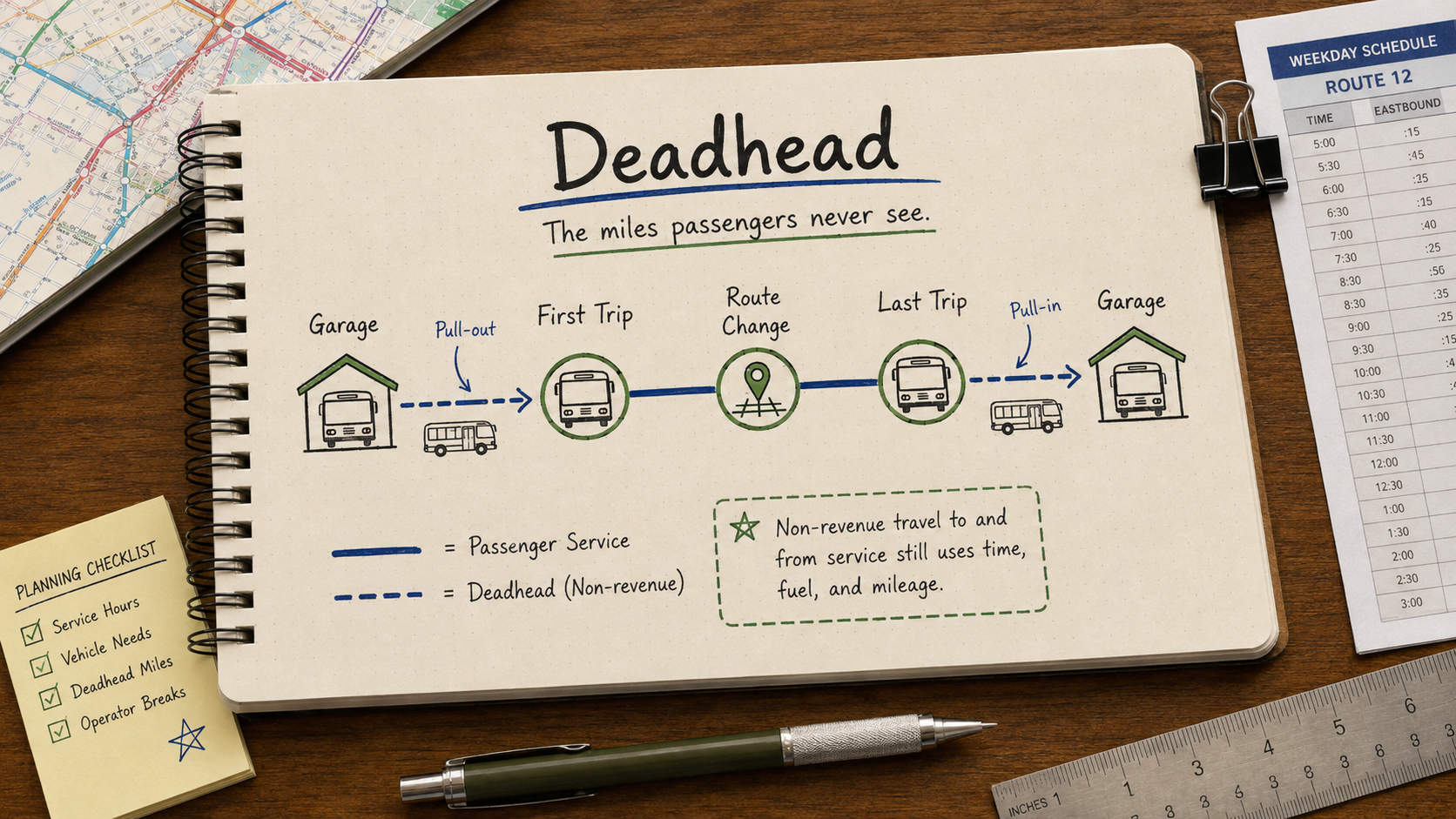
Deadhead: The Miles Passengers Never See

Not every mile a transit bus travels carries passengers. Deadhead movements connect garages, routes, terminals, and assignments, and although they never appear in the public timetable, they consume time, mileage, fuel, electricity, and operating resources.

Read Article

Transit Operations6 min read

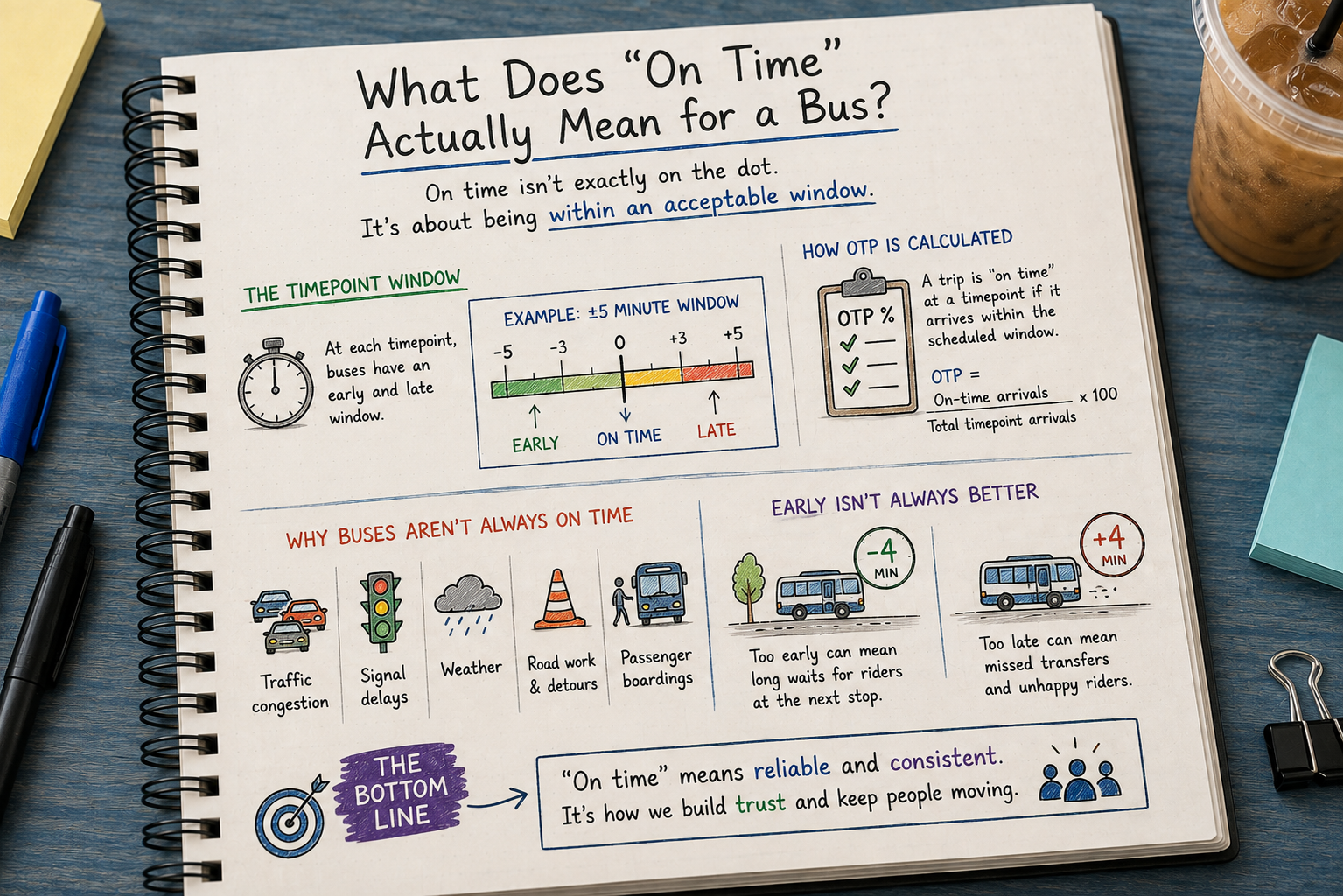
What Does “On Time” Actually Mean for a Bus?

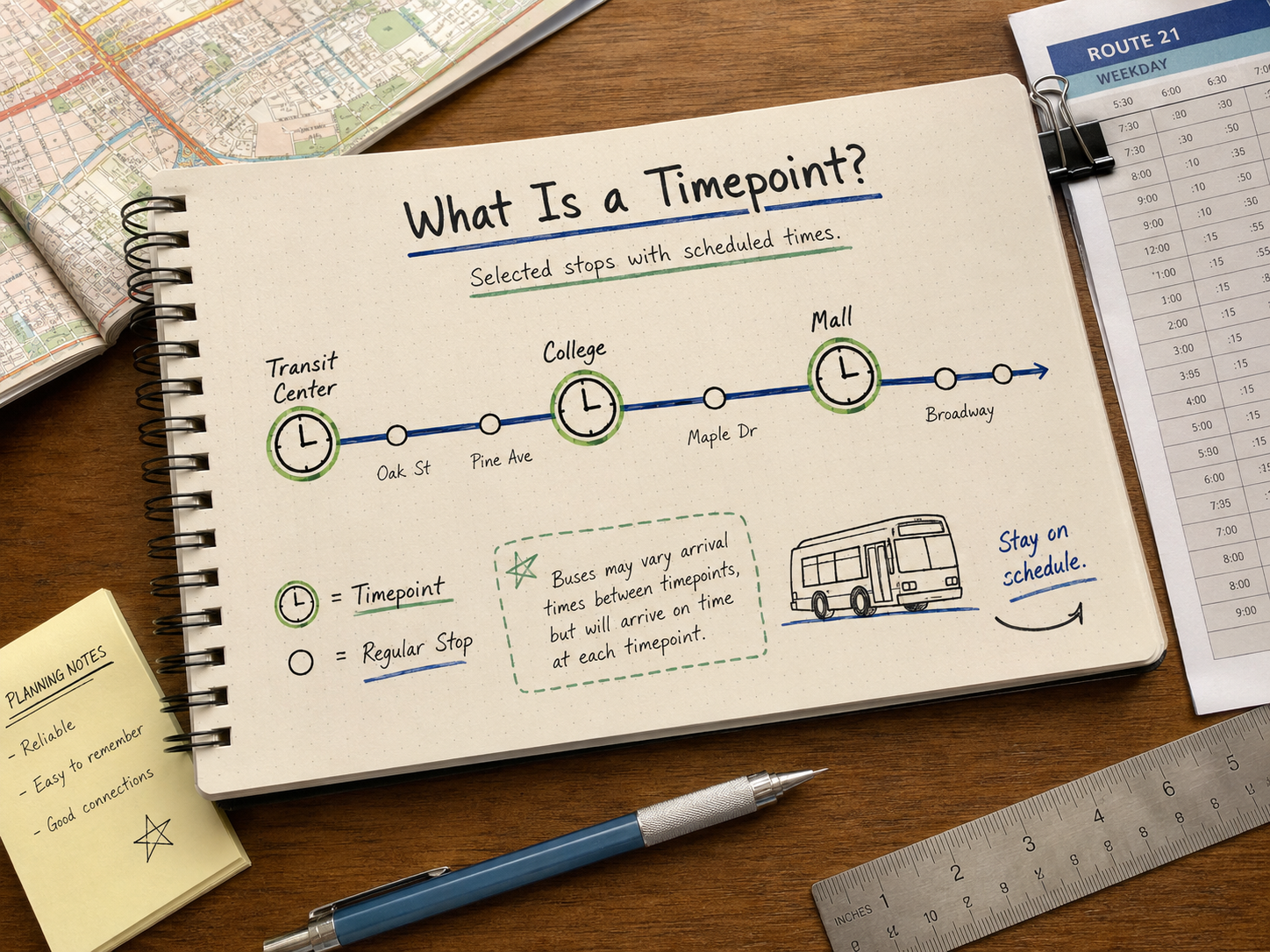
On-time performance is one of transit’s most important service measures, but “on time” does not always mean arriving at the exact scheduled minute. Understanding early departures, late arrivals, timepoints, and schedule adherence helps explain what the numbers really measure.

Read Article

Browse by Topic

About the Blog

A Transit Planner’s Notebook provides practical explanations of how bus routes, schedules, blocks, recovery time, vehicle assignments, stops, and transit operations work. It also explores destination signs, transit technology, historical documents, and lessons learned from years of working in public transportation.

New articles from the planning desk

Receive occasional updates when new articles are published. No daily emails and no unnecessary promotions.

Newsletter updates will be available soon.